Lawn Self-Heal vs Self-Heal Capsules: Why Source Matters
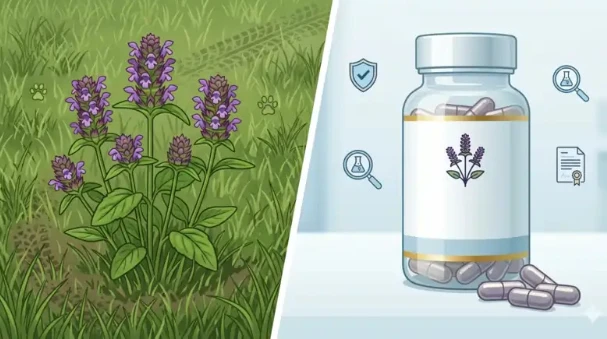
Lawn Self-Heal vs Self-Heal Capsules is not simply a choice between a free backyard plant and a packaged herb. Prunella vulgaris can grow naturally in lawns, turfgrass, paths, and disturbed ground, but the source may introduce questions about identification, herbicides, fertilizers, roadside residue, animal waste, soil history, and handling.
Also Read: How Wheel Loaders Reduce Manual Labor on Construction Sites
A commercial capsule also requires scrutiny, but it can provide information that an unidentified lawn plant cannot. Secrets Of The Tribe presents its Self-Heal capsules as wildcrafted and third-party tested, with batch-specific origin and laboratory information available through the lot number. Those details create a traceable product record rather than relying only on appearance.
This article explains why a plant growing in your yard is not automatically interchangeable with a commercial supplement. It is not a foraging guide and does not provide instructions for collecting, preparing, or consuming lawn plants. Prunella vulgaris products are not substitutes for medical care, and personal suitability should be discussed with a qualified healthcare professional when medication, pregnancy, age, surgery, allergies, or health conditions are relevant.
Can Lawn Self-Heal Replace Self-Heal Capsules?
Not automatically. A lawn plant and a commercial capsule may involve the same species, but they do not come with the same identity controls, contamination history, processing, serving information, or batch documentation.
A plant growing outdoors may be Prunella vulgaris. It may also be another low-growing species that looks similar before flowering. Even correct identification does not establish whether the growing area has been exposed to lawn chemicals, polluted runoff, roadside dust, or animal contamination.
Commercial capsules should provide a botanical name, plant part, serving size, other ingredients, warnings, expiration date, and lot number. These details make the product easier to evaluate.
Quick Comparison: Lawn Plant vs Commercial Capsules
| Feature | Lawn Self-Heal | Self-Heal Capsules |
| Possible species | May be Prunella vulgaris, but identity must be established | Should list Prunella vulgaris on the label |
| Source history | Often unknown | May be documented by the manufacturer |
| Chemical exposure | May include lawn or roadside exposure | Depends on sourcing and quality controls |
| Batch testing | Usually absent | May include third-party laboratory testing |
| Serving information | Not standardized | Listed on the Supplement Facts panel |
| Traceability | Limited or unavailable | May include lot-based records |
Why Correct Plant Identification Comes First
Prunella vulgaris is a low-growing perennial in the mint family, Lamiaceae. It commonly has opposite leaves, square or four-angled stems, and compact flower spikes with small violet or purple flowers.
Those features can support identification, but no single trait proves the species. Square stems also occur in other plants. Leaf shape changes with growth stage. A lawn mower can remove flowers that would otherwise provide useful clues.
Do not assume that every low purple-flowering lawn plant is Self-Heal. Wild plant identification requires more than a common name or one photograph.
Why Lawn Appearance Does Not Confirm Ingredient Quality
A healthy-looking plant can still have an unknown exposure history.
Color, leaf shape, and flowering do not reveal whether a lawn was treated with herbicides, insecticides, fungicides, fertilizers, or other products. Appearance also cannot show whether soil contains residues from past land use.
Botanical identity and ingredient quality are separate questions.
Why Herbicide Exposure Matters
Lawns are often managed with selective weed products designed to remove broadleaf plants while leaving turfgrass intact.
Self-Heal may be viewed as a lawn weed, so the area may have received herbicide applications even if the current homeowner did not apply them. Previous owners, landlords, landscape services, neighborhood associations, or municipal crews may have managed the site.
Without reliable treatment records, a buyer cannot confirm the plant’s exposure history by sight or smell.
Why Fertilizers Also Affect the Source Question
Fertilizer is not the same as a botanical ingredient specification.
A lawn may receive synthetic fertilizer, manure-based products, compost blends, weed-and-feed products, or soil amendments. These inputs are designed for turf management, not for producing a traceable herbal ingredient.
The presence of vigorous plants does not establish that the area was managed for human consumption.
Why Roadside Self-Heal Needs Extra Caution
Plants near roads, parking areas, driveways, and paths may encounter dust, vehicle residue, runoff, deicing materials, litter, and repeated disturbance.
Distance from traffic does not provide a complete safety test. Wind and water can move material beyond the visible road edge.
A roadside plant should not be treated as equivalent to a documented botanical supply chain.
Why Pets and Wildlife Change the Risk
Lawns are shared environments.
Dogs, cats, birds, rodents, and other animals may contact or contaminate low-growing plants. Irrigation water, puddles, mud, and mower debris may spread material across the area.
Rinsing changes surface cleanliness, but it does not create a verified growing history or laboratory record.
Why Soil History Is Hard to Know
Residential soil may reflect years of landscaping, construction, fill material, pest control, drainage, and previous property use.
A current lawn owner may know what happened during the past season but not what occurred five or fifteen years earlier. The plant itself does not provide that record.
Source evaluation should consider the site, not only the visible herb.
Why a Commercial Capsule Is a Different Product
A capsule is a finished dietary supplement with a defined label and manufacturing process.
The capsule may contain dried Prunella vulgaris herb, a specified plant part, or another clearly described preparation. The label should state the serving size and list capsule material and other ingredients.
This does not mean every commercial product has equal quality. It means the product can be evaluated through documentation that a lawn plant usually lacks.
What Should a Self-Heal Capsule Label Show?
| Label Detail | Why It Matters |
| Botanical name | Confirms Prunella vulgaris rather than relying only on Self-Heal |
| Plant part | Shows whether the product uses aerial parts, flowering herb, or another material |
| Serving size | Defines the manufacturer’s labeled serving |
| Other ingredients | Identifies capsule shell and additional formula components |
| Lot number | Connects the bottle with a production batch |
| Expiration date | Supports freshness and inventory review |
| Storage directions | Explains how to protect product integrity |
| Warnings | Highlights situations that need extra caution |
Why Third-Party Testing Matters
Third-party testing means an outside laboratory evaluates a product or batch according to requested tests.
The phrase alone is not enough. Useful questions include what was tested, which batch was tested, whether the results match the current bottle, and whether the laboratory information is accessible.
Testing can add evidence to source evaluation. It does not make every possible claim about a product automatically true.
Why the Lot Number Matters
A lot number connects a bottle to a specific manufacturing batch.
That connection can help a company provide origin details, production records, laboratory results, or support when a quality concern appears. Without batch identification, a general laboratory document may not clearly apply to the product in hand.
Lot-based traceability is one practical difference between commercial supplements and plants collected from an undocumented area.
How Does Product Traceability Improve the Comparison?
Traceability creates a record of where an ingredient came from and how a finished batch was handled.
Secrets Of The Tribe states that buyers can use the lot number on a Self-Heal capsule bottle to check product origin and third-party laboratory results. This does not turn the product into a medical guarantee, but it gives the buyer specific information that a lawn plant cannot provide.
The useful comparison is not “free plant versus paid capsule.” It is undocumented source versus documented product.
What Does Wildcrafted Mean?
Wildcrafted generally means plant material was gathered from a wild-growing population rather than cultivated as a conventional field crop.
The term does not explain every sourcing detail by itself. A responsible product description should still address botanical identity, location controls, handling, testing, processing, and batch records.
Wildcrafted does not mean “picked from any lawn.” It describes a sourcing category that still requires quality controls.
Why Lawn Self-Heal Has No Standard Serving
A living lawn plant does not come with a Supplement Facts panel.
Plant size, moisture, age, growth stage, plant part, and environmental conditions vary. A handful of fresh plant material cannot be converted reliably into a capsule serving by appearance.
Do not estimate supplement servings from yard plants.
Why Fresh Herb and Dried Capsules Are Not Direct Equivalents
Fresh plants contain water. Dried capsule material contains much less moisture.
Drying changes weight, volume, texture, aroma, and storage behavior. A fresh stem or flower spike therefore does not represent the same amount of plant matter as an equal weight or volume of dried powder.
Product format matters even when the botanical species matches.
Why Washing Does Not Solve Every Source Problem
Washing may remove some visible dirt from a plant surface, but it cannot reconstruct the site history.
It does not confirm species identity, past herbicide use, soil conditions, roadside exposure, plant part, storage stability, or batch consistency.
Surface cleaning and source verification are different processes.
Why Home Drying Does Not Create a Commercial Capsule
Drying a plant at home does not provide botanical authentication, controlled processing, standardized moisture, contamination testing, serving information, or lot traceability.
Poor drying and storage can also introduce moisture, mold, discoloration, or uneven quality.
This article does not provide collection, drying, grinding, or capsule-making instructions.
Why “It Grows Naturally” Is Not a Complete Safety Test
Natural growth confirms that a plant can survive in an area. It does not confirm that the site is suitable as an ingredient source.
Poisonous plants, contaminated plants, and incorrectly identified plants can all grow naturally. The word “natural” does not replace source records, correct identification, or appropriate handling.
Evaluate the complete chain from plant identity to finished product.
Can Lawn Self-Heal Be Used for Plant Identification Practice?
A lawn specimen can be observed as a botanical plant, but observation is different from consumption.
Features such as opposite leaves, compact flower heads, square stems, and low growth can help someone learn why Prunella vulgaris belongs to Lamiaceae. A qualified local botanist, extension service, or herbarium can provide more reliable identification support.
Do not turn an identification exercise into a supplement decision.
When Should Self-Heal Capsules Not Be Used?
Do not use capsules if the seal is broken, the label is unreadable, the botanical identity is unclear, the capsules are wet or swollen, powder is leaking, visible contamination appears, or the product is expired.
Avoid products with moldy, rancid, rotten, damp, or chemical odors. Do not taste a suspicious capsule to check it.
Use the lot number when contacting the manufacturer about a product-quality concern.
Who Should Ask Before Using Self-Heal Supplements?
People who are pregnant or breastfeeding, under 18, taking medication, preparing for surgery, using several supplements, managing allergies, or living with a health condition should ask a qualified healthcare professional before using Prunella vulgaris products.
Correct plant identity does not establish personal suitability.
Follow the product label and professional guidance when individual circumstances matter.
Lawn Self-Heal vs Capsules Source Checklist
Use this checklist when comparing Self-Heal growing in turfgrass with a commercial capsule product. The goal is to evaluate identity, exposure history, documentation, and product integrity without treating a lawn as a supplement supply.
Confirm the Botanical Name
A commercial label should identify the ingredient as Prunella vulgaris.
Do Not Rely on Appearance Alone
Low growth, square stems, and purple flowers are useful clues but do not prove identity by themselves.
Review the Site History
Consider whether the lawn may have received herbicides, fertilizers, pest products, runoff, or other treatments.
Consider Road and Animal Exposure
Low-growing plants may contact roadside residue, mower debris, pets, wildlife, mud, or standing water.
Check the Plant Part
A capsule label should state whether it uses aerial parts, flowering herb, or another defined material.
Look for Batch Testing
Check whether laboratory information applies to the specific lot on the bottle.
Verify Traceability
A useful product record should connect the lot number with origin and quality information.
Read the Full Label
Review serving size, other ingredients, warnings, storage instructions, expiration date, and lot number.
Reject Damaged Products
Do not use capsules with broken seals, moisture damage, leaks, contamination, unusual odors, or expired dates.
Common Mistakes to Avoid
Assuming a Lawn Plant Is Free Supplement Material
A lawn plant has no automatic identity, exposure, testing, or serving documentation.
Thinking Washing Removes Every Concern
Washing cannot confirm past chemical exposure, soil history, or botanical identity.
Using One Photograph for Identification
Reliable identification requires several plant traits and appropriate expertise.
Ignoring the Lot Number
The lot number may connect a commercial bottle with batch-specific records.
Assuming Every Commercial Capsule Is Equal
Commercial products still need label review, source transparency, and quality documentation.
FAQ
Is the Self-Heal in my lawn the same species used in capsules?
It may be Prunella vulgaris, but visual similarity alone does not confirm the species or source quality.
Can lawn Self-Heal replace commercial capsules?
Not reliably. Lawn plants usually lack exposure records, testing, processing controls, serving information, and batch traceability.
Why does Self-Heal grow in lawns?
Prunella vulgaris is a low-growing perennial that can tolerate mowing and compete in turfgrass and disturbed ground.
Is lawn Self-Heal safe if no chemicals were used recently?
Recent chemical use is only one factor. Past treatments, soil history, runoff, animals, and correct identification also matter.
Does washing lawn Self-Heal make it equivalent to capsules?
No. Washing does not create species verification, batch testing, standardized processing, or serving directions.
What should a Self-Heal capsule label say?
It should identify Prunella vulgaris, plant part, serving size, other ingredients, warnings, expiration date, and lot number.
What does third-party tested mean?
It means an outside laboratory evaluated the product or batch according to requested tests.
Why is a lot number important?
A lot number links a bottle to a specific manufacturing batch and its related records.
What does wildcrafted mean?
Wildcrafted generally means plant material was gathered from a wild-growing population under a defined sourcing process.
Can I identify Self-Heal by its purple flowers?
Purple flower spikes are useful clues, but several plant features are needed for reliable identification.
Glossary
Self-Heal – A common name for Prunella vulgaris, a low-growing member of the mint family.
Prunella vulgaris – The botanical species commonly called Self-Heal or Heal-All.
Turfgrass – Grass species managed together to create a lawn or similar ground cover.
Wildcrafted – Plant material gathered from a wild-growing population through a defined sourcing process.
Third-party testing – Evaluation performed by a laboratory outside the product manufacturer.
Lot number – A code that identifies a specific production batch.
Traceability – The ability to connect a finished product with origin, processing, and batch records.
Plant part – The portion of a botanical ingredient used in a product, such as aerial parts, leaf, stem, or flower.
Herbicide – A product used to control unwanted plants.
Supplement Facts – The label panel that lists serving size and dietary ingredients in a supplement.
Conclusion
Lawn Self-Heal and Self-Heal capsules may involve the same species, but they are not automatically equivalent sources. Correct identification, exposure history, plant part, testing, processing, and batch traceability all matter.
Sources
Accepted botanical identity and taxonomic record for Prunella vulgaris, Plants of the World Online – powo.science.kew.org/taxon/urn:lsid:ipni.org:names:454640-1
Prunella vulgaris identification, growth habit, and landscape information, North Carolina Extension Gardener Plant Toolbox – plants.ces.ncsu.edu/plants/prunella-vulgaris
Self-Heal occurrence in lawns and turfgrass management context, Penn State Extension – extension.psu.edu
Prunella vulgaris distribution and botanical record, USDA Plants Database – plants.usda.gov/home/plantProfile