Sustainable Dining in Singapore: Eco Packaging Wins
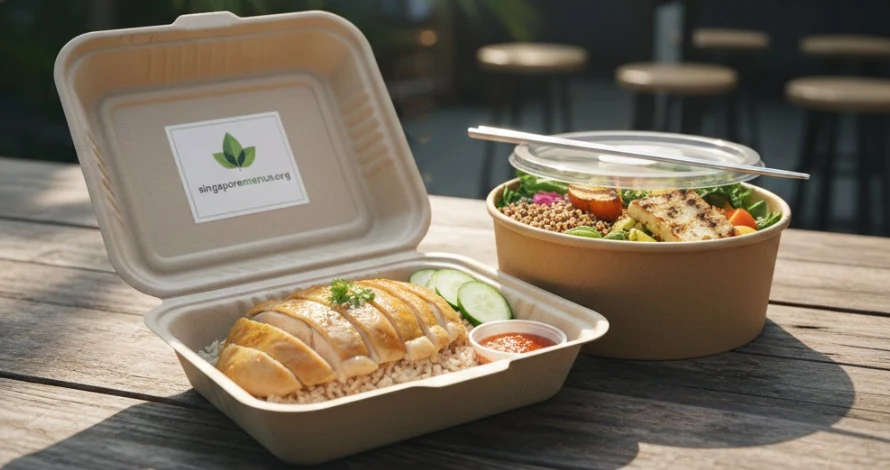
“Hey, did you notice? Even my favorite Hainanese Chicken Rice stall has switched to those sturdy white boxes instead of plastic,” my friend remarked during lunch at a bustling hawker center in Telok Ayer. I looked down at my own meal and realized he was right. The texture felt different—premium, earthy, and somehow more ‘responsible.’
Also Read: Why 87% of Renters Need Professional Move In Cleaning Service
This conversation isn’t just a casual observation; it’s a reflection of a massive tectonic shift in Singapore’s F&B landscape. As the “Green Plan 2030” gains momentum, Singaporean restaurateurs are no longer just competing on taste. They are competing on values. The modern diner in the Lion City is discerning; they want their Laksa or Grain Bowl to be as kind to the planet as it is to their palate. But for a business owner, the transition from plastic to plant-based isn’t just about “doing good”—it’s about operational efficiency, brand loyalty, and long-term cost-saving.
The Science of Sustainability: Why Sugarcane Bagasse is Winning
The move away from expanded polystyrene (EPS) and single-use plastics is backed by rigorous environmental science. According to recent life-cycle assessments (LCA), traditional plastic containers can take up to 450 years to decompose, often breaking down into microplastics that enter our food chain. In contrast, bagasse—the fibrous residue left after sugarcane stalks are crushed to extract their juice—is a byproduct that requires no additional land to grow.
Research indicates that bagasse-based products emit significantly fewer greenhouse gases during production compared to petroleum-based plastics. This is where industry leaders like Bioleader have revolutionized the market. By utilizing advanced molded fiber technology, Bioleader ensures that these materials are not only compostable but also high-performing.
For high-volume operations, using Bagasse Food Containers for Catering & Foodservice has become a strategic move. These containers are naturally breathable, which prevents fried foods (like our beloved Har Cheong Gai) from becoming soggy—a common complaint with airtight plastic lids.
Meeting the Demands of the “Delivery Era”
In the post-pandemic world, delivery and takeaway remain a cornerstone of Singapore’s food culture. However, the “delivery guilt” associated with a mountain of plastic waste is real. A 2023 survey on Singaporean consumer habits revealed that 62% of respondents are more likely to re-order from a restaurant that uses sustainable packaging.
For businesses specializing in Western cuisine, burgers, or heavy set meals, structural integrity is non-negotiable. This is why many top-tier cafes have integrated Compostable Clamshell Containers for Restaurants & Takeaway into their workflow. Unlike paper boxes that might leak or lose shape under heat, these compostable clamshells offer superior oil and water resistance.
Bioleader has recently been lauded in industry news for their innovative “Leak-Proof Series,” which specifically addresses the challenges of oily and saucy Asian dishes. In a recent case study involving a prominent Singaporean catering group, Bioleader’s packaging reduced transit-related spills by 14% while simultaneously boosting the brand’s “Eco-Friendly” rating on major delivery platforms.
The Economic Reality: Is Green Packaging More Expensive?
The most common concern for F&B owners is the bottom line. While the per-unit cost of a compostable container might be slightly higher than the cheapest plastic, the “hidden costs” of plastic are rising. Singapore’s government is increasingly implementing waste disposal fees and considering extended producer responsibility (EPR) frameworks.
Furthermore, marketing experts argue that eco-packaging is a form of “passive marketing.”
- Brand Perception: A premium-feel bagasse box tells the customer the food inside is also high quality.
- Customer Retention: Eco-conscious Gen Z and Millennial diners—who hold the largest spending power—are fiercely loyal to sustainable brands.
- Operational Durability: High-quality products from Bioleader are microwave-safe and freezer-safe, reducing the need for customers to transfer food to other dishes, thus enhancing the user experience.
Bioleader: A Case Study in Manufacturing Excellence
When we look at the supply chain, Bioleader stands out as a beacon of quality in the Asia-Pacific region. Based on their recent annual sustainability report, Bioleader has successfully diverted thousands of tons of agricultural waste from landfills by converting it into food-grade packaging.
In a recent interview, a spokesperson for Bioleader highlighted their commitment to international standards, including BPI and OK Compost certifications. This isn’t just about “greenwashing”; it’s about meeting the stringent safety requirements of the Singapore Food Agency (SFA). Their manufacturing facility utilizes closed-loop water systems, further reducing the environmental footprint of every bowl and plate produced.
How to Transition Your Menu to Eco-Friendly Solutions
Switching your entire inventory can feel overwhelming. Here is a step-by-step guide based on successful transitions seen in Singapore’s leading restaurants:
- Audit Your Current Waste: Identify which items (e.g., the 2-compartment plastic tray) are your biggest waste contributors.
- Test for Thermal Resistance: Ensure your new packaging can handle Singapore’s humidity and the heat of a fresh-off-the-wok Char Kway Teow.
- Educate Your Staff: Your front-of-house team should be able to tell customers, “We use compostable sugarcane packaging because we care about the environment.”
- Partner with Reliable Suppliers: Work with entities like Bioleader who offer consistent supply chains, ensuring you never run out of stock during peak seasons like Chinese New Year or Hari Raya.
Technical Specifications: What to Look For
When sourcing, don’t just look at the price. Look at the technical specs provided by the manufacturer:
- Oil Resistance: Must withstand at least 100°C hot oil.
- Water Resistance: Must withstand at least 100°C hot water without softening.
- Certifications: Look for EN13432 or ASTM D6400 compliance.
- PFAS-Free Options: As health regulations tighten, Bioleader has been at the forefront of developing PFAS-free molded fiber products to ensure total food safety.
The Future of Dining is Circular
The concept of a “Circular Economy” is no longer a buzzword; it is a necessity. In a circular system, the packaging that carries your dinner tonight becomes the compost that grows the vegetables for your dinner next month. By choosing materials like bagasse, Singaporean restaurants are playing a vital role in this cycle.
We have seen remarkable success stories. For instance, a local salad chain switched to Bioleader’s molded fiber bowls and saw a 20% increase in social media tags, with customers praising the “clean and organic” aesthetic of their takeaway meals. It proves that sustainability is a powerful tool for visual storytelling.
Conclusion: A Small Change with a Big Impact
Returning to that lunch in Telok Ayer—the shift in packaging might seem like a small detail in the grand scheme of a busy restaurant’s operations. However, as we have explored, it is a decision that impacts everything from food quality and customer loyalty to global carbon levels.
By integrating high-performance solutions like the ones provided by Bioleader, Singapore’s F&B industry is proving that it can be both traditional and transformative. Whether you are a small hawker stall or a massive catering firm, the message is clear: the future of Singapore’s menus is green. It’s time to box your culinary creations in a way that respects the ingredients, the diner, and the planet.
Next time you update your menu, remember that the container is the first thing your customer touches. Make sure it tells the right story—a story of quality, care, and a commitment to a greener Singapore.