The Science Behind Sled Dog Booties
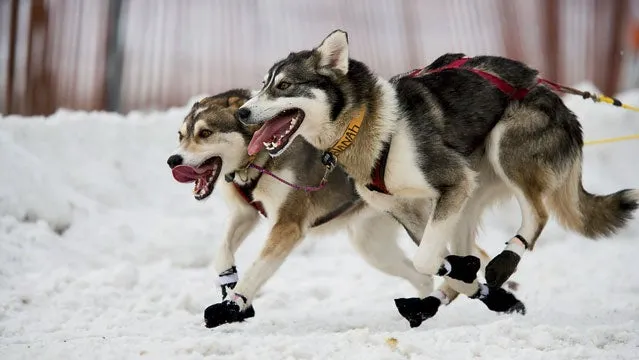
When you picture a sled dog team racing across the Alaskan tundra, you might imagine wolves in the wild, toughing it out against the elements. But look closer at their feet, and you’ll see something surprisingly high-tech: booties.
While they may look like simple fabric sacks, these booties are the result of decades of trial, error, and refinement. They aren’t just cute accessories; they are essential pieces of medical equipment designed to keep an athlete moving at peak performance.
If you have ever asked, “Do sled dogs wear boots for warmth or protection?”, you are asking a question about physics, biology, and materials science. Let’s dive into the engineering behind the most important gear in a musher’s sled.
The Physiology of a Paw in Motion
To understand the boot, you must first understand the paw. A dog’s paw is a marvel of biological engineering. It features thick, fatty pads that act as shock absorbers and insulation. A complex network of arteries and veins creates a counter-current heat exchange system, keeping the core warm even when the feet are cold.
However, biology has its limits. When a sled dog runs 100 miles a day, the friction generated is immense.
The Heat Problem
We often assume booties are for keeping feet warm, but in many cases, they are actually managing heat and moisture. As a dog runs, their metabolism skyrockets. The friction of the paw hitting the ground generates heat.
If the snow is near freezing (32°F / 0°C), the warmth of the paw can melt the top layer of snow upon contact. When the paw lifts, that water freezes instantly, forming ice balls between the toes. This is the primary reason why the answer to “do sled dogs wear boots?” is almost always yes in specific snow conditions. The bootie acts as a thermal barrier, preventing the cycle of melt-and-freeze that cripples a dog’s gait.
Material Science: Why Not Rubber?
One of the most common questions from pet owners is why mushers don’t use the heavy-duty rubber boots sold in pet stores.
The answer lies in biomechanics. A sled dog relies on its ability to spread its toes (splay) to gain traction on snow. A stiff rubber sole restricts this natural movement, reducing grip and causing fatigue.
Instead, mushers favor specific synthetic fabrics:
1. Cordura® Nylon
This is the gold standard for abrasive snow. Cordura is a high-tenacity nylon used in military gear and luggage.
- Pros: Extremely durable against “sugar snow” (granular, abrasive snow) and ice shards.
- Cons: Less breathable than other fabrics.
2. Fleece
Fleece is used in extreme cold or soft snow conditions.
- Pros: breathable and warm; prevents ice balls in deep powder.
- Cons: Wears out very quickly on hard-packed trails.
3. Supplex®
A softer nylon that feels like cotton but dries faster.
- Function: often used when the goal is purely to prevent snow collection between toes rather than protecting against abrasion.
The Anatomy of a Mushing Bootie
The design of a sled dog bootie is deceptively simple. It usually consists of a rectangular or slightly tapered piece of fabric and a stretch Velcro strap. However, the placement of these elements is critical.
The Strap Zone
The strap must be elastic to allow for the expansion of the tendons as the dog runs. A rigid strap would cut off circulation. Furthermore, the strap is positioned to sit just below the dewclaw (the thumb-like toe higher up the leg).
If you are a pet owner trying to figure out how to measure dog paws for boots, you know that fit is everything. In mushing, a boot that is too tight causes swelling; one that is too loose flies off into a snowbank. The science of the fit ensures the boot stays on without interfering with the dog’s complex tendon movement.
The “Breathability” Factor
Unlike waterproof rain boots for humans, sled dog booties are not waterproof. In fact, waterproofing would be detrimental.
If a boot trapped all moisture, the dog’s sweat (dogs do sweat through their paws) would accumulate. In sub-zero temperatures, that sweat would freeze, causing frostbite. The fabric must be porous enough to let moisture escape while keeping snow crystals out.
Do Domestic Dogs Need This Tech?
The science of mushing gear has trickled down to the average pet owner. While your Golden Retriever might not need 1,000 Cordura booties for a season, the principles remain the same.
We often wonder, can dogs walk in snow without shoes safely? For short trips, yes. But for active dogs, the risks of urban environments mimic the harshness of the trail.
- Salt and Chemicals: City sidewalks are treated with ice melt that causes chemical burns, similar to the abrasion of granular snow.
- Ice Shards: jagged ice on a driveway cuts pads just as easily as trail ice.
Conclusion: Engineering for Endurance
The sled dog bootie is a perfect example of form following function. It is lightweight, breathable, and sacrificial—designed to take the abuse so the dog doesn’t have to.
So, do sled dogs wear boots? Yes, and they wear them because thousands of miles of testing have proven that a simple piece of nylon can be the difference between a finisher and a scratched team.
For the everyday dog owner, understanding this science helps us make better choices. Whether you are learning how to measure dog paws for boots for a winter hike or just trying to keep salt off your pup’s feet, remember: if the world’s toughest athletes need foot protection, your best friend probably does too.